Wellies in the Bag, Jumpers on the Rail: A Pugneys Family Dressing Guide

Photo: family wearing waterproof coats and wellies at heritage railway station UK autumn, via thumbs.dreamstime.com
There is a particular kind of family that arrives at Pugneys Light Railway dressed for a brisk dog walk and leaves looking as though they have been basting a Christmas pudding. Steam has a way of finding the one pale sleeve in the bag. So this guide starts with a small shift in thinking: dress for the railway, not the forecast. The weather app tells you about the sky. The railway tells you about steps, soot, draughts, warm carriages and the puddle that has settled exactly where a small person wants to jump.
Start With the Railway, Not the Weather App
A day out at Pugneys is not one single climate. The car park can be breezy, the platform can be sheltered and surprisingly mild, the carriage can be cosy once the doors are shut, and the walk back to the car can feel like a different season altogether. That is why the most useful family wardrobe is not a thick coat and a hopeful expression. It is a set of layers you can add, remove and stuff into a bag without a full costume change on the platform.
Think of your family as having three versions of themselves on any given visit: the waiting family, the travelling family and the going-home family. If each version has a jumper, a waterproof and a spare pair of socks within reach, you are already winning.
The Three-Layer Rule for Platform Weather
A simple base layer, a warm middle and a weatherproof outer layer will handle most Pugneys days without turning the car boot into a jumble sale. T-shirts and long-sleeve tops are fine as a base. A fleece, hoodie or light jumper does the middle job. A packable waterproof or a shower-resistant coat finishes the set.
Avoid the temptation to dress everyone in their heaviest winter coats in November and then spend the carriage journey peeling small people like onions. A warm child in a hot carriage is not a comfortable child. Layers let you adjust without drama.
Hats and gloves are worth packing from late autumn onwards, even if the sun is out when you leave home. Thin gloves are easier for little hands than bulky ones, and a spare pair in the bag is cheaper than a platform meltdown. For summer visits, a sun hat and a light long-sleeve layer are just as sensible as sunscreen.
Feet: The Honest Part of the Packing List
This is where family railway days are won and lost. Pugneys has steps, uneven surfaces, gravel, grass edges and platform gaps to navigate. Sturdy, closed-toe shoes with a bit of grip are the best default for everyone. Trainers are fine. Walking shoes are better. Wellies are excellent for wet days and puddle-heavy walks, but they are not always the comfiest choice for climbing steps or standing around for a while.
If you bring wellies, bring socks that can be changed. If you bring trainers, bring spare socks anyway. Damp socks are the quickest route to a grumpy afternoon, and a dry pair in a sandwich bag takes up almost no room. Avoid open-toed sandals, flip-flops and smooth-soled fashion shoes for a railway visit. They are not a safety statement; they are a small invitation to a slip.
Soot Happens: Spares for Small Passengers
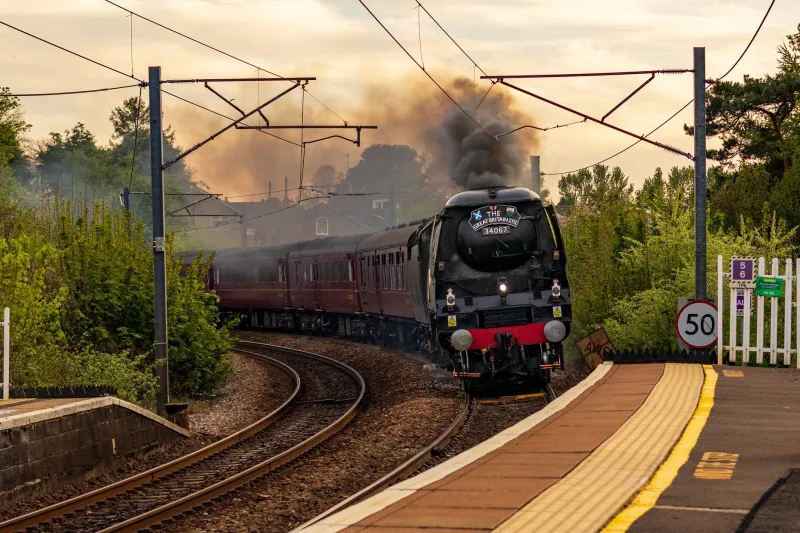
Steam is part of the magic, and soot is part of steam. A smudge on a sleeve or a dusty mark on a knee is not a disaster, but it is much easier to shrug off if you have packed a spare top for each child. A full change of clothes for toddlers and preschoolers is worth its weight in gold. For older children, a spare jumper and socks will usually do.
Choose clothes that can be washed without ceremony. Darker colours and busy patterns hide railway grime better than pale trousers, but the real trick is not to save the best outfit for the occasion. Pugneys is a place for jumping, pointing and leaning over to look at wheels. Dress for that.
A small pack of wet wipes, a cloth or a couple of kitchen towels is handy for sooty hands and muddy fingers. Keep them somewhere you can reach without unpacking the whole bag.
What to Avoid Near Moving Engines
Near moving engines, loose clothing is the thing to watch. Long trailing scarves, dangling bag straps, open-toed shoes, long unzipped coats and anything with a drawstring that can catch are best avoided or tucked away. Tie back long hair. Keep bags close to the body rather than swinging from a hand. And remind children that the best place to watch is behind the fence or from the platform, not at the edge of the track.
This is not about fright or formality. It is the same common-sense dressing you would use for any busy outdoor attraction with big moving machinery. Comfortable, close-fitting layers and secure footwear let everyone relax and look properly.
A Simple Family Checklist
- Waterproof jackets that pack down small
- One warm mid-layer per person
- Spare socks for everyone, plus one extra pair for little ones
- A full change of clothes for toddlers and preschoolers
- Sturdy closed-toe shoes with grip
- Wellies for wet weather, with dry socks to change into
- Thin gloves and hats from autumn onwards
- Wet wipes or a small cloth for sooty hands
- A reusable bag for damp or dirty clothes
- Hair bobbles for anyone with long hair
Car Park to Carriage: A Five-Minute Routine
Before you leave the car, do a quick family check. Coats on if it is chilly. Hoods up if it is spitting. Bags zipped. Laces tied. Then put the spare socks and the children's change of clothes in one easy-to-grab bag and leave the rest in the boot if you can. At Pugneys, the less you carry onto the platform, the easier the steps and the carriage feel.
When you come back to the car, have a dry layer ready for the journey home. It is a small kindness after a big day, especially in cooler months. A flask in the boot is not strictly a clothing item, but it earns its place beside the wellies.
Dressing for Pugneys is really about giving everyone permission to get a bit mucky, stay warm, dry out and keep moving. The railway will supply the steam, the stories and the soot. Your job is simply to bring the layers, the spare socks and a bag that can take a bit of railway life.