Slow Down and Look: Nine Tiny Treasures Around Pugneys Light Railway
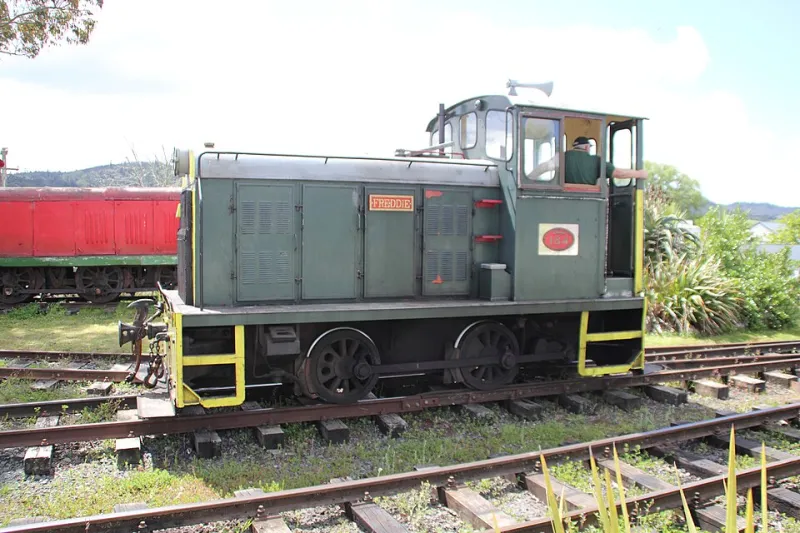
Photo: Noel Jones, CC BY-SA 2.0, via Wikimedia Commons
There is a temptation, when the whistle blows, to treat a heritage railway as a ride. You climb on, you chuff along, you climb off. But Pugneys Light Railway rewards the dawdler. The real charm is often in the details you almost miss: a faded sign, a brass fitting, the sound of a ticket being punched. These are not just decorations. They are the small, human touches that make a railway feel lived in.
Next time you visit, try to build in ten minutes of nothing. No rush for the train, no dash for the cafe. Just stand on the platform and look. Here are nine tiny treasures to start you off.
1. The ticket punch that bites a tiny shape
Watch the guard or booking clerk handle a paper ticket. There is a satisfying click as the punch bites through, leaving a small shape behind. Children love this bit, partly because it feels official and partly because it is a little bit destructive in a safe way. Grandparents often remember the same action from their own childhoods, when every train journey began with a ticket that could be clipped. It is a tiny ritual, but it marks the start of the day.
2. Enamel signs with soft, faded edges
Look up at the platform notices and you will find old-style enamel signs with chipped edges and slightly faded colours. Some advertise teas, some warn you to mind the gap, and some simply say the name of the railway in a typeface that belongs to another era. Do not just read them. Notice the chips and scratches. Each one is a small record of weather, use and time. They are not perfect, and that is exactly the point.
3. The platform clock that refuses to hurry
A station clock is a serious thing, but on a heritage platform it can feel almost gentle. Watch the hands move, or listen for the tick if it is that kind of clock. It reminds you that train time is not the same as everyday time. You are not late for a meeting. You are waiting for a steam engine. Let the clock do its job and let yourself do nothing for a minute.
4. A guard's whistle and the brass bell
Sounds are half the magic of a railway. The guard's whistle is sharp and purposeful, while a brass bell has a warmer, rounder note. Listen for the difference between the two. If you are travelling with children, ask them to copy the sounds or to guess what each one means. It is a simple game that turns waiting into part of the adventure. For older visitors, those sounds can unlock memories of holidays, commuting or childhood days out that had long been tucked away.
5. The smell of steam, oil and hot metal
You will notice the steam first, but stay with it. There is oil, hot metal, coal smoke and the faint sweetness of whatever is baking in the cafe. It is a smell that does not really exist anywhere else. Close your eyes for a second and you could be in a different decade. Children often describe it as the smell of the train. Grandparents tend to describe it as the smell of going somewhere.
6. Hand-painted lettering on carriage panels
Look closely at the lettering on the carriages and you may see the slight wobble of a human hand rather than the perfect uniformity of a machine. Names, numbers and notices were often painted by someone who cared about the job. The next time you board, run your eye along the side of the carriage. Find a letter that is slightly thicker than the rest, or a number that sits just a little off centre. That is not a flaw. That is a signature.
7. Benches polished by a thousand coats
The wooden benches on the platform have probably been sat on by thousands of people. Look at the arms and the seat edges. They are smoother and darker where hands and coats have rested. A bench is a humble thing, but it holds a lot of waiting: parents with prams, grandparents with flasks, children swinging their legs. Sit on one for a moment. You are adding to its history.
8. The old luggage trolley by the fence
There is often a luggage trolley, milk churn or similar piece of old railway equipment tucked away at the edge of the platform. It may not be the star of the show, but it tells a story about how things used to move. Ask an older visitor what they remember about luggage on trains. Ask a child what they think the trolley was for. The answers will be different, and both will be interesting.
9. The signal arm and the final wave
Before you leave, watch the signal arm move. It is a simple piece of mechanics, but it carries a lot of meaning. Then look for the final wave from the guard or the driver as the train pulls away. It is a small gesture, easily missed if you are already thinking about the car park. But it is the kind of detail that makes Pugneys Light Railway feel like a place rather than an attraction. Someone is saying goodbye. Someone is glad you came.
These nine details are not a checklist to race through. They are an invitation to slow down. Bring a grandparent and ask what they notice. Bring a child and let them lead the looking. Bring a camera if you like, but try to spend as much time looking as you do photographing. The big moments will happen anyway. It is the tiny ones that stay with you.